The Sumerian Tablets:
Wrestling Before Greece

Long before the Olympic torch was lit, wrestlers were already competing. A bronze figurine from Sumer depicts two wrestlers locked in a technique modern grapplers would still recognize — the oldest sports imagery ever discovered.

+
Sumerian wrestlers bronze figurine
Bronze wrestlers · Khafajah, Sumer · c. 2600 BC · Oriental Institute, Chicago

Most people think of wrestling as a Greek invention. But archaeology tells a different story. In 1927, excavators uncovered a small bronze figurine in Khafajah, Iraq — ancient Sumer — depicting two wrestlers in a clinch that any modern grappler would recognize immediately. The piece dates to approximately 2600 BC.

Around the same period, tomb paintings at Beni Hassan in Egypt depicted over 400 wrestling techniques in extraordinary detail — single legs, double underhooks, takedown defense, referees officiating. The sport predates recorded history in multiple civilizations simultaneously. It is not a Greek invention. It is a human one.

The Gilgamesh epic — one of the oldest written stories in existence — centers on a wrestling match. Gilgamesh and Enkidu, the wild man, meet in combat. Their match doesn't end in victory and defeat. It ends in brotherhood. This was always what wrestling was for.

"The oldest sports imagery in existence is not a race, not a throw, not an arrow. It is two men grappling — because that is the oldest contest there is."
↗ Follow on Instagram

Beni Hassan:
400 Techniques in Stone

On the walls of Egyptian tomb No. 15 at Beni Hassan, an ancient artist painted over 400 wrestling positions in sequence — a complete technical manual carved into rock four thousand years ago.

+
Beni Hassan wrestling tomb paintings
Wrestling scenes · Tomb of Baqet III · Beni Hassan, Egypt · c. 2000 BC

In the Middle Kingdom tombs of Beni Hassan, scholars discovered something extraordinary: a systematic visual record of wrestling technique covering 400 distinct positions, painted in horizontal registers across the tomb walls of Baqet III.

The techniques depicted are not primitive. Modern wrestling historians have identified single-leg takedowns, double-leg attacks, trips, hip throws, and ground control positions that are still taught today. There are referee figures. There is scoring. The sport was already codified, competitive, and sophisticated four thousand years ago.

What makes Beni Hassan remarkable is not just the age — it's the quantity and the intent. Four hundred techniques. This wasn't decorative art. This was instruction. Someone cared enough about the transmission of wrestling knowledge to have it preserved permanently in stone.

"They didn't just show wrestlers. They showed the full curriculum — as if they knew this knowledge needed to survive forever."
↗ Follow on Instagram

Wrestling Enters
the Olympic Games

At the 18th ancient Olympiad, wrestling was added to the program. To compete at Olympia was not merely athletic achievement — it was a sacred rite performed in honor of Zeus, witnessed by the entire Greek world.

+
Ancient Greek wrestlers on geometric pottery, Louvre
Wrestlers on Geometric oinochoe · c. 715–700 BC · Louvre, Paris

Wrestling was added to the ancient Olympics at the 18th Olympiad in 708 BC. The format was orthopale — upright wrestling — in which a fall to the knee, hip, or back counted as a point. Three takedowns won the match. The sand of the palaestra was sacred ground, consecrated to Zeus.

To win at Olympia was not merely athletic achievement. It was spiritual. Victors returned home as demigods — their city-states erecting statues, granting free meals for life, exempting them from taxation, sometimes literally building them into the city walls as living talismans. The Olympic champion was proof that the gods still favored their city.

The training grounds — the Palaestra — were as much temple as gymnasium. Young men didn't just learn to wrestle there. They learned rhetoric, philosophy, music. The great philosophers trained alongside athletes. Wrestling was the context in which Greek education happened. Body and mind were never separate.

"They did not simply crown him. They made him part of the city's story — permanent, immortal, carved in stone."
↗ Follow on Instagram

Pankration:
When Wrestling Became Everything

The ancient Greeks combined wrestling and striking into one event: Pankration — "all power." Only two rules: no biting, no eye-gouging. Everything else was permitted. It was the most prestigious event at the Games.

+
Pankration scene on Panathenaic amphora
Pankration, Panathenaic amphora · c. 500 BC · British Museum, London

Added to the Olympics in 648 BC, Pankration was the most prestigious event in the ancient Games — a full-contact combat sport combining wrestling's takedowns and ground control with striking. Competitors could punch, kick, choke, and apply joint locks. Only biting and eye-gouging were forbidden. The match ended when a competitor submitted, was knocked unconscious, or died.

Arrhichion of Phigalia won the Olympic Pankration posthumously. His opponent had him in a chokehold so tight that Arrhichion, in the final moments before losing consciousness, dislocated his opponent's ankle. The opponent submitted from the pain — just as Arrhichion died from the choke. The judges awarded the victory to the corpse. His body was crowned with olive.

Polydamas of Skotoussa, a 5th century pankration champion, was said to have killed a lion bare-handed in imitation of Heracles. When the Persian king Darius II heard of his feats, he summoned Polydamas to his court, where Polydamas reportedly defeated three of the king's elite soldiers simultaneously.

"They did not compete to survive. They competed to perfect themselves in the only arena where excellence could be proven absolutely."
↗ Follow on Instagram

Milo of Croton:
The Undefeated

Six Olympic titles. Twenty-four Panhellenic victories. For over two decades no man in the Greek world could put him on his back. And his training method invented progressive overload 2,500 years before modern sports science.

+
Milo of Croton sculpture by Pierre Puget, Louvre
Milo of Croton · Pierre Puget, 1682 · Musée du Louvre, Paris

Milo of Croton won the wrestling competition at six consecutive Olympic Games between 540 and 516 BC. He also won seven times at the Pythian Games, ten at the Isthmian Games, and nine at the Nemean Games. For over two decades, no man in the Greek world could put him on his back.

The legend of his training: as a boy, Milo began carrying a newborn calf on his shoulders every day. As the calf grew, so did Milo's strength. By the time the animal was a full-grown bull, Milo was carrying it across the stadium at Olympia. Progressive overload — the foundational principle of modern strength training — was being practiced in 6th century BC Calabria.

In battle he reportedly wore his Olympic wreaths and dressed in a lion skin — Heracles made flesh — to break enemy morale before the first blow. He was said to eat 9 kg of meat and 9 kg of bread per day. He could snap a thick branch by flexing his neck. He held a pomegranate so delicately that no man could take it from him, yet never bruised the skin. Control, not just strength.

"He was not just the strongest man. He was the model — proof of what human potential looks like when pursued without compromise or apology."
↗ Follow on Instagram

Plato the Wrestler:
The Philosopher's Other Life

Before the Republic, before the Theory of Forms, before the Academy — Plato was a competitive wrestler. His very name may be a wrestling nickname meaning "broad-shouldered," given to him by his coach.

+
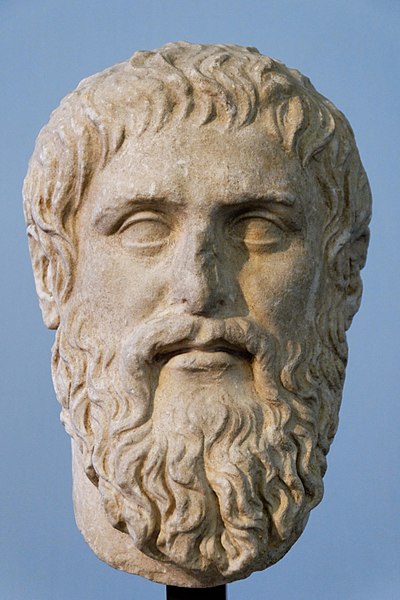
Plato bust, Capitoline Museums
Plato · Roman copy after Silanion, c. 370 BC · Musei Capitolini, Rome

His birth name was Aristocles. "Plato" — from the Greek platos, meaning broad — is widely believed to be a nickname given by his wrestling coach Ariston of Argos, referring to his powerful, broad-shouldered frame. The greatest philosopher in Western history was first known to the world as a wrestler.

He competed at the Isthmian Games. His teacher Socrates trained at the Palaestra. The dialogue between mind and body that defines Greek philosophy was not theoretical — it was lived. Plato understood that wisdom without physical discipline was incomplete, and that the discipline of wrestling was among the finest teachers a person could have.

In the Theaetetus, Plato uses wrestling metaphors for philosophical argument. In the Republic, physical education — including wrestling — is foundational to the ideal state. In the Laws, he writes that upright wrestling positions are the most useful for war and the best training for the body. For Plato, the mat was not separate from the school. It was the school.

"No man has the right to be an amateur in the matter of physical training. It is a shame for a man to grow old without seeing the beauty and strength of which his body is capable." — Socrates
↗ Follow on Instagram

Emperor Theodosius
Extinguishes the Flame

In 393 AD, Emperor Theodosius I banned the Olympic Games as a pagan festival. After 1,169 years of unbroken competition, the ancient Olympics ended. Wrestling went underground — but never disappeared.

+

The ancient Olympics ran for 1,169 years — from 776 BC to 393 AD — without interruption, surviving wars, plagues, invasions, and the collapse of city-states. They survived Alexander's empire, the rise of Rome, multiple sieges of Olympia. What finally ended them was a Roman emperor's religious conviction.

Theodosius I, who had made Christianity the official religion of the empire, declared the Games incompatible with Christian values — the nude competition, the offerings to Zeus, the sacred flame. The sanctuary at Olympia was ordered dismantled. The stadium fell silent.

But wrestling itself never stopped. Through the collapse of Rome, through the medieval period, through every empire that rose and fell over the next 1,500 years, wrestling remained. In village festivals across Europe, in the courts of feudal lords, in the martial training of soldiers, in monastery yards and market squares — the human instinct to grapple proved unkillable.

"You cannot ban a practice that lives in muscle memory, not ideology. Wrestling simply moved underground, and waited."
↗ Follow on Instagram

The German Masters:
Wrestling as Martial Science

Medieval Europe codified wrestling into systematic manuals — the Fechtbücher — that preserved technique in extraordinary detail. In the 14th century, wrestling wasn't recreation. It was survival science.

+
Medieval German wrestling manual, Codex Wallerstein
Wrestling techniques · Codex Wallerstein · c. 1470 · Augsburg, Germany

While the Olympic tradition had faded, wrestling went underground into the martial culture of medieval Europe. The German tradition of Ringen was systematically preserved in manuscripts called Fechtbücher — fighting books — produced by masters throughout the 14th and 15th centuries.

The master Ott the Jew — one of the most cited wrestling authorities of the era — produced a comprehensive system covering standing wrestling, ground fighting, and armed grappling. His work appears in over a dozen surviving manuscripts. He served the Austrian court and was clearly held in the highest regard. A Jewish master teaching wrestling to Christian knights in medieval Austria — the mat has always been indifferent to the divisions men create outside of it.

The techniques in these manuals — hip throws, ankle picks, arm control, positional domination — are immediately recognizable to any modern wrestler or jiu-jitsu practitioner. The body has always known what works. The masters simply wrote it down.

"These were not bar fights written down. They were systematic martial arts produced with the same intellectual rigor as any philosophical text."
↗ Follow on Instagram

Abraham Lincoln:
The Wrestling President

Before he was President, Abraham Lincoln was one of the finest wrestlers in Illinois — 6'4" with a reach advantage that made him nearly unbeatable. In twelve years of competitive wrestling, he lost exactly once.

+
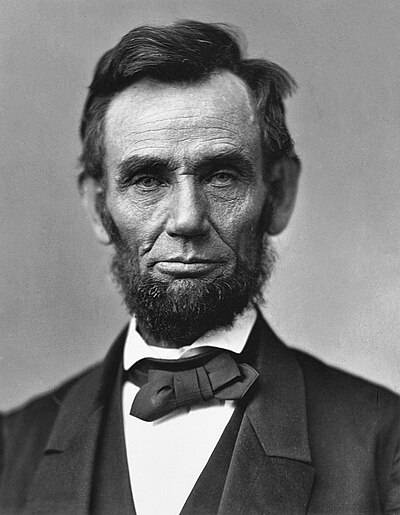
Abraham Lincoln photograph
Abraham Lincoln · Photograph by Mathew Brady · 1862

Abraham Lincoln stood 6'4" with exceptionally long arms and legs — a body built for the catch-as-catch-can wrestling common on the American frontier. In Clary's Grove, New Salem, Illinois in 1831, he faced Jack Armstrong, the local wrestling champion, in a match that has passed into American legend.

Accounts vary — some say Lincoln threw Armstrong cleanly, others that Armstrong fouled him and Lincoln accepted a draw. What's agreed upon is what happened after: Armstrong's gang, who had bet against Lincoln, tried to rush him. Lincoln reportedly stood with his back to a wall and offered to fight them one at a time or all at once. They backed down. Armstrong shook his hand. They became lifelong friends.

The National Wrestling Hall of Fame inducted Lincoln in 1992 as an "Outstanding American." In twelve years of frontier wrestling, he lost a single match. He used the sport as a political tool — a candidate who could wrestle earned a frontier legitimacy that no speech could match. His physical confidence and willingness to compete directly shaped how a generation perceived his character as a leader.

"I'm the big buck of this lick. If any of you want to try it, come on and whet your horns." — Abraham Lincoln, New Salem, 1831
↗ Follow on Instagram

Athens 1896:
The Games Return

When Pierre de Coubertin revived the Olympic Games, wrestling was there from the first day. It had survived every empire, every dark age, every century that tried to forget it.

+
1896 Athens Olympic Games poster
Official poster · First Modern Olympic Games · Athens, April 1896

The first modern Olympic Games were held in Athens in April 1896 — a deliberate return to the city that had given the world organized athletic competition. Greco-Roman wrestling was included from the very first day, with Carl Schuhmann of Germany winning the event, defeating a Turkish soldier named Mustafa in a match that reportedly lasted over 40 minutes before Schuhmann finally executed a throw that ended it.

The symbolism was deliberate. In choosing Athens, in including wrestling, de Coubertin was making a declaration: these are the values we're trying to recover. Competition as character formation. Sport as moral education. His philosophy of Olympism was the modern translation of the Greek idea of Areté.

Freestyle wrestling was added at the 1904 St. Louis Games. Women's wrestling joined at Athens 2004 — 108 years after the revival, 2,700 years after the ancient origin. The story is long. It is not finished.

"The important thing in life is not the triumph, but the struggle; the essential thing is not to have conquered, but to have fought well." — Pierre de Coubertin
↗ Follow on Instagram

Dan Gable, Munich:
Not a Single Point Surrendered

At the 1972 Munich Olympics, Dan Gable won the gold medal in freestyle wrestling without surrendering a single point across six matches. It is considered one of the greatest individual performances in Olympic history.

+

Dan Gable arrived at the 1972 Munich Olympics carrying something beyond athletic ambition. Two years earlier, his sister Diane had been murdered. He channeled everything into wrestling with a purity of focus that bordered on monastic. He trained twice daily, every day, for years without a single rest day.

At Munich, he won all six matches without allowing his opponents to score a single point against him. Six matches. Zero points allowed. In Olympic wrestling. Against the best wrestlers in the world. It remains one of the most dominant individual performances in the history of any Olympic sport.

After competing, Gable became head coach at Iowa and built the most dominant dynasty in American collegiate sports history — 15 NCAA team championships in 21 years, including nine consecutive. He produced 45 NCAA individual champions. His philosophy was simple: "Once you've wrestled, everything else in life is easy."

"Gold medals aren't really made of gold. They're made of sweat, determination, and a hard-to-find alloy called guts." — Dan Gable
↗ Follow on Instagram

The IOC Tries to Remove Wrestling.
The World Says No.

In February 2013, the IOC voted to remove wrestling from the Olympics — cutting the sport that had been present at every modern Games since 1896 and at the ancient Olympics since 708 BC. The response was historic.

+

On February 12, 2013, the IOC Executive Board voted to drop wrestling from the 2020 Olympic program. The stated reason: performance metrics. Television ratings, ticket sales, global appeal. The sport wasn't modern enough, the IOC decided.

The response was immediate and global. Olympic champions, world champions, national federations from 177 countries, and millions of wrestlers launched a campaign that was methodical, strategic, and deeply personal. They didn't just argue tradition. They argued transformation — new weight classes, new scoring systems, new broadcast formats. They showed the IOC what wrestling looked like when it fought for its life.

In September 2013, the IOC voted to reinstate wrestling to the 2020 Olympics, defeating baseball/softball and squash for the final spot. The sport that had survived the Roman Empire, medieval Christianity, and 1,500 years of cultural amnesia had survived a boardroom vote. The oldest sport on earth was staying in the oldest athletic competition on earth.

"They tried to cut the roots. What they found was that the roots went all the way to the bottom of human history — and they were not coming out."
↗ Follow on Instagram

Areté Is Not a
Destination. It Is a Practice.

Every wrestler who steps on the mat today is participating in the same pursuit that Milo, Plato, Dan Gable, and a billion unnamed athletes have engaged in across five thousand years of human history.

+

The ancient Greeks had a concept called kairos — the decisive moment, the perfect instant when action must be taken. In wrestling, every match is made of kairos moments: the instant to shoot, to sprawl, to turn and finish. The sport is an education in recognizing and seizing those moments under maximum pressure.

What five thousand years of wrestling history reveals is not primarily a story of competition. It is a story of character formation. The Sumerians wrestled to demonstrate strength. The Egyptians codified it as training. The Greeks elevated it to philosophy. Medieval Europe used it as martial preparation. America made it a frontier rite of passage. The modern world has made it an Olympic art.

But in every era, the thing that drove wrestlers to the mat — the thing that still drives them there today — was never better named than by the Greeks who gave it a word: Areté. The relentless, lifelong commitment to the fullest expression of what a human being can become.

"Once you've wrestled, everything else in life is easy." — Dan Gable
↗ Follow the ongoing story on Instagram